Basic Consonants
🔄 1. Previous Lesson Recap
김 민지: 🟣 Do you remember our last lesson?
Amelia: 💗 Yes! We looked at the word 바나나.
김 민지: 🟣 Right! Do you remember what it’s made of?
Amelia: 💗 Umm… consonants and vowels?
김 민지: 🟣 Exactly! In 바나나, the consonants go on the left and the vowels go on the right.
Amelia: 💗 Oh! Like ㅂ and ㅏ make 바!
김 민지: 🟣 Perfect! And do you remember the vowel ㅏ?
Amelia: 💗 Yup, it sounds like “a” in “car.”
🟡 2. Introduction
김 민지: 🟣 Today’s a big day — we’re starting to learn the 14 basic Korean consonants!
Amelia: 💗 Whoa, 14? That sounds like a lot…
김 민지: 🟣 It might sound like a lot, but they’re super easy once you see how they work.
These consonants are like puzzle pieces that help you build Korean words.
Amelia: 💗 Oh, cool. What will I be able to do after today?
김 민지: 🟣 By the end of this lesson, you’ll be able to:
✅ Recognize all 14 consonants
✅ Understand how they combine with vowels
✅ Say them out loud clearly
✅ Write them in the correct stroke order
✅ Start building real Korean words and sentences!
Amelia: 💗 I’m ready! Let’s go!
🟢 3. Meet the 14 Consonants
김 민지: 🟣 Alright, first, take a look at these 14 consonants. These are the basic ones in Korean.
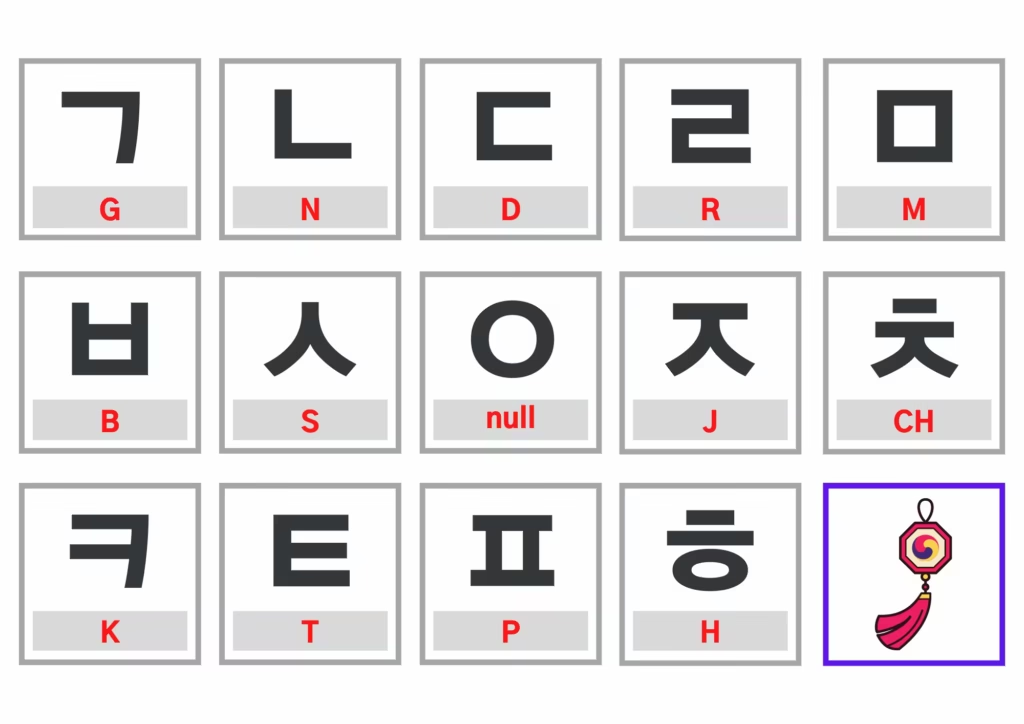
Amelia: 💗 Ooh! So many cute little shapes!
김 민지: 🟣 Haha, yeah! Each one has a sound, just like in English. And remember — in Korean, consonants can’t stand alone. They need a vowel to form a syllable.
Amelia: 💗 Like a buddy system?
김 민지: 🟣 Exactly! Let’s use the vowel ㅏ (which you already know) to help us practice each one.
| Consonant | Pronounced Like | Example (with ㅏ) | Sound |
|---|---|---|---|
| ㄱ | g/k in “go” | 가 | ga |
| ㄴ | n in “no” | 나 | na |
| ㄷ | d in “day” | 다 | da |
| ㄹ | r/l in “run”/“lead” | 라 | ra/la |
| ㅁ | m in “mom” | 마 | ma |
| ㅂ | b in “boy” | 바 | ba |
| ㅅ | s in “see” | 사 | sa |
| ㅇ | silent (initial) / ng (final) | 아 | a |
| ㅈ | j in “jump” | 자 | ja |
| ㅊ | ch in “chair” | 차 | cha |
| ㅋ | k in “king” | 카 | ka |
| ㅌ | t in “top” | 타 | ta |
| ㅍ | p in “pop” | 파 | pa |
| ㅎ | h in “hello” | 하 | ha |
Amelia: 💗 Wait… ㅇ is silent?
김 민지: 🟣 Yes! When it comes at the beginning, it has no sound. But at the end, it sounds like “ng” in “song.”
Amelia: 💗 Whoa, that’s weird—but kinda cool!
김 민지: 🟣 You’ll get used to it quickly. Let’s say a few syllables together!
👄 4. Practice: Let’s Pronounce Korean Consonants!
김 민지: 🟣 I’ll say a syllable, and you repeat after me. Ready?
Amelia: 💗 Ready!
김 민지: 🟣 Great job! You’re really picking this up fast.
🎯 5. Practice: Let’s Make Words!
김 민지: 🟣 Guess what? With just the 14 consonants and the vowel ㅏ, you can already start reading real Korean!
Amelia: 💗 Really? That fast?
김 민지: 🟣 Yup! You’ve already seen how “나 바나나 사다” means “I buy bananas,” right?
Amelia: 💗 Yeah, I remember that!
김 민지: 🟣 Great. In the next video, we’ll quickly review that and then learn some new words and sentences together.
Amelia: 💗 Sounds good! I’m ready for more.
김 민지: 🟣 Let’s keep going — you’re doing great!
김 민지: 🟣 You just made 3 full Korean sentences for your first day with consonants!
Amelia: 💗 I feel like I’m actually reading Korean!
🧾 6. Lesson Summary
김 민지: 🟣 Let’s review what you learned today.
Amelia: 💗 I learned 14 consonants!
김 민지: 🟣 Yup — and you practiced combining them with ㅏ to make syllables. What else?
Amelia: 💗 Hmm… consonants always need vowels?
김 민지: 🟣 That’s right! And remember, ㅇ is silent at the start.
Amelia: 💗 And with just one vowel and these consonants, I can already make real words!
김 민지: 🟣 You’ve got it!
📘 7. What’s Next?
김 민지: 🟣 Next time, we’ll learn more vowels — like ㅓ, ㅗ, and ㅜ.
Amelia: 💗 More vowels mean more syllables, right?
김 민지: 🟣 Exactly! That means more words and more fun. Keep practicing your consonants, and you’ll be surprised how fast you improve.