The Best Way to Practice Korean
Stop Studying Rules
Start building your Speaking Reflex
14 Years of Real-World Training. No Formulas, Just Results
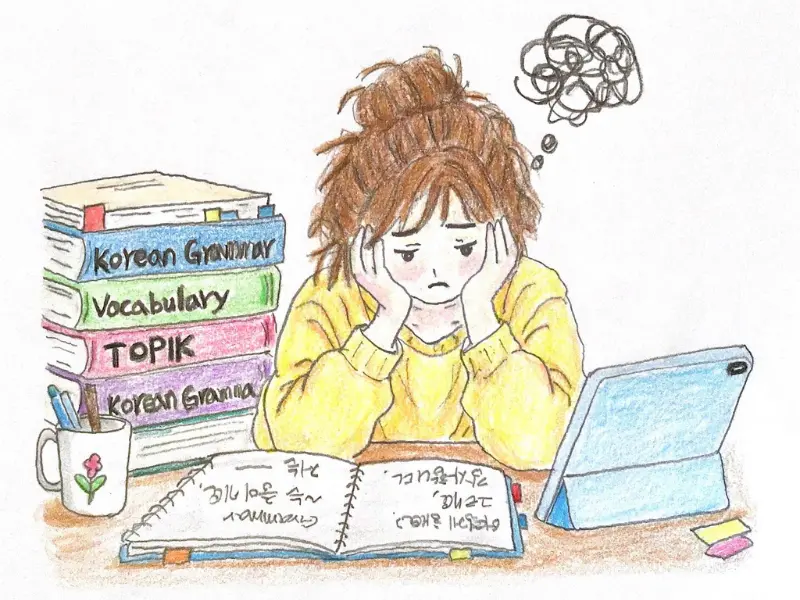
Why Most Students Fail to Speak


The Explainer
Method: Explains rules in detail
Feeling: “I finally understand!”
Result: You Freeze in real talks

The Practice Coach
Method: 100% Active Speaking
Feeling: A real brain workout
Result: You Just Speak naturally
Most platforms just throw “Seeds” at you
(Vocabulary, Grammar, Free Talking)
But without tilling your “Brain Soil,” nothing grows.
At Korean Practice, we till your soil first
How We Build Your Korean Brain

Step 1: Stress-Free Context (Fertilizing)
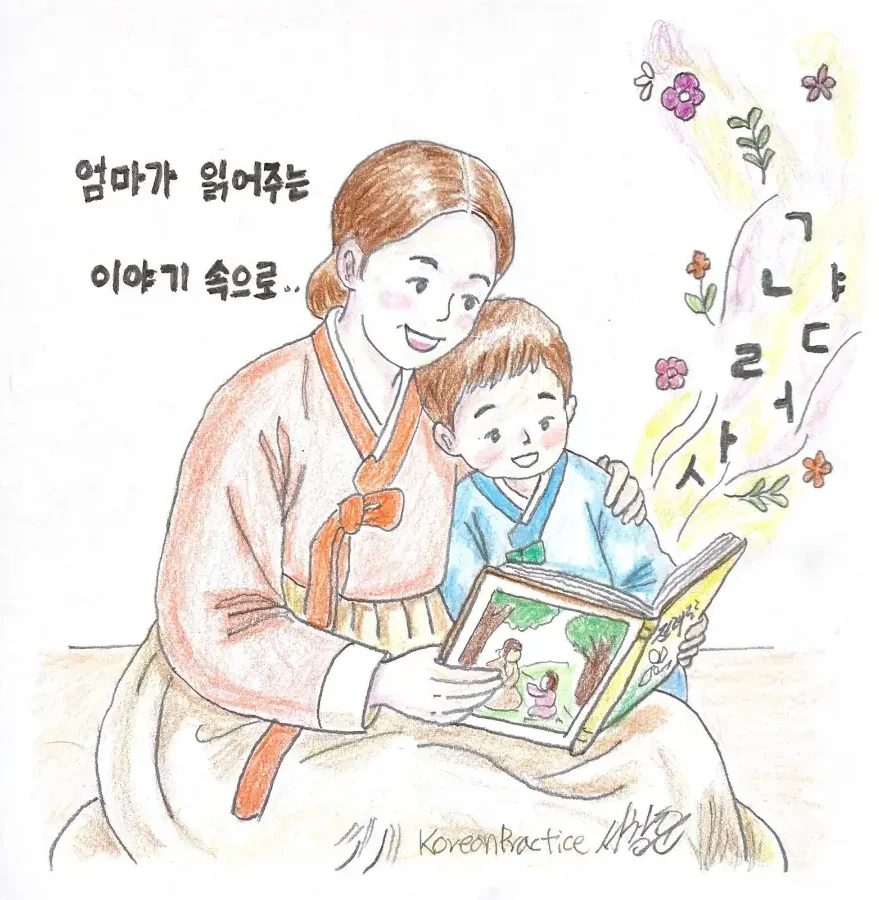
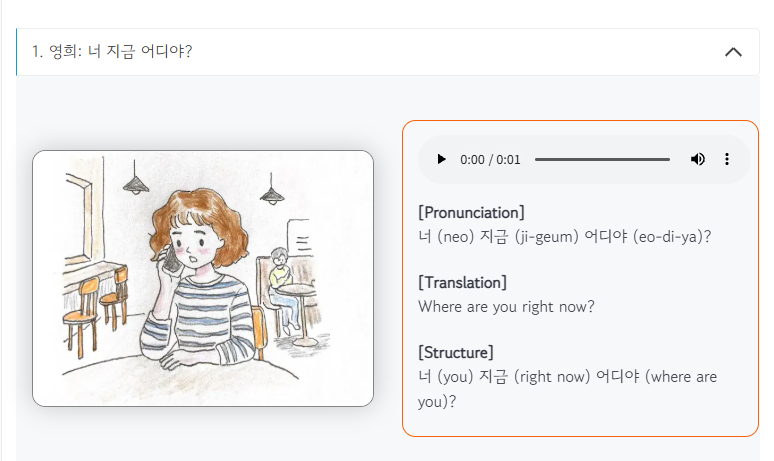
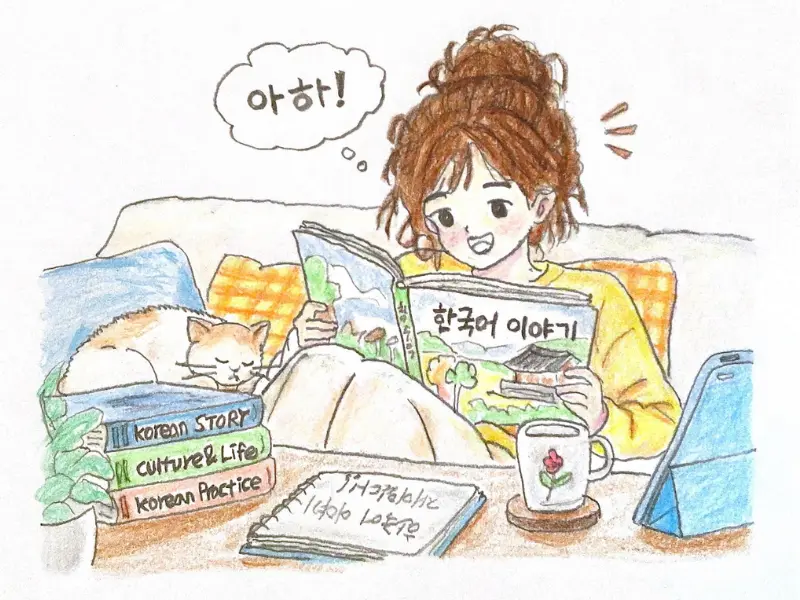
Forget boring formulas. We start with Real Stories. I break down natural Korean sentences so you understand the “Logic” intuitively. No memorization. This softens your “Brain Soil” to accept Korean word order naturally.
Confused by Korean grammar before? Read this once, and you’ll finally get it

🚀 Quick Learning
Original Korean Sentence
딸: “엄마, 내 생일 잔치 때, 입을 옷이 없어.”
Pronunciation Guide
엄마 (eom-ma), 내 (nae) 생일 (saeng-il) 잔치 (jan-chi) 때 (ddae), 이블 (i-beul) 오시 (o-si) 업써 (eop-sseo).
English Translation
Mom, I don’t have any clothes to wear to my birthday party.
Literal Translation
Mom, (I) don’t have clothes that (I) will wear when my birthday party.
Quick Reference
엄마 (mom), 내 (my) 생일 (birthday) 잔치 (party) 때 (when), 입을 (to wear) 옷이 (clothes) 없어 (don’t have).
🔍 Deep Learning
Meaning and Context
엄마 (mom)
내 (my)
생일 (birthday)
→ 생 (life) + 일 (day)
잔치 (party, feast)
때 (time, when)
입 (to wear; stem of 입다)
을 (future modifier)
→ Connects the verb to the noun, creating “clothes that (I) will wear.”
옷 (clothes)
이 (subject marker)
→ Marks clothes as the subject of the sentence.
없 (to not have, exist; stem of 없다)
어 (casual tone)
→ I’m telling you casually.
Real-Life Usage
“~을/ㄹ + noun” is used to describe something you plan to do or will do with that noun: “먹을 음식” (food to eat), “읽을 책” (book to read), “만날 사람” (person to meet). This pattern is essential for talking about future actions related to things.
Pattern Practice
1. 내일 입을 옷을 준비했어.
2. 읽을 책이 너무 많아.
3. 먹을 게 없어.
4. 할 일이 많아.
Other platforms just dump translations and word lists, leaving you to struggle on your own. We think that’s irresponsible. At Korean Practice, every single sentence is 100% broken down so you understand the ‘Why’ and ‘How’ crystal clear. Zero grammar knowledge? No problem. We make the logic work for you.

Step 2: Core Pattern Building (Planting)
Once you understand the story, we isolate High-Frequency Patterns. Your brain learns to recognize the “Skeleton” of the language. Now, your brain is no longer a desert; it’s a structured field ready for any sentence.

Listen and read the same patterns repeatedly until the structure is hardwired into your brain. This allows you to build and speak your own sentences naturally.

Step 3: The Reflex Workout (Growing)
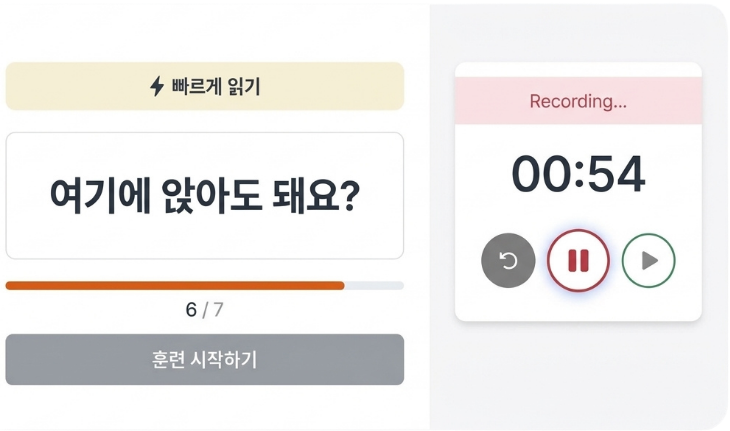
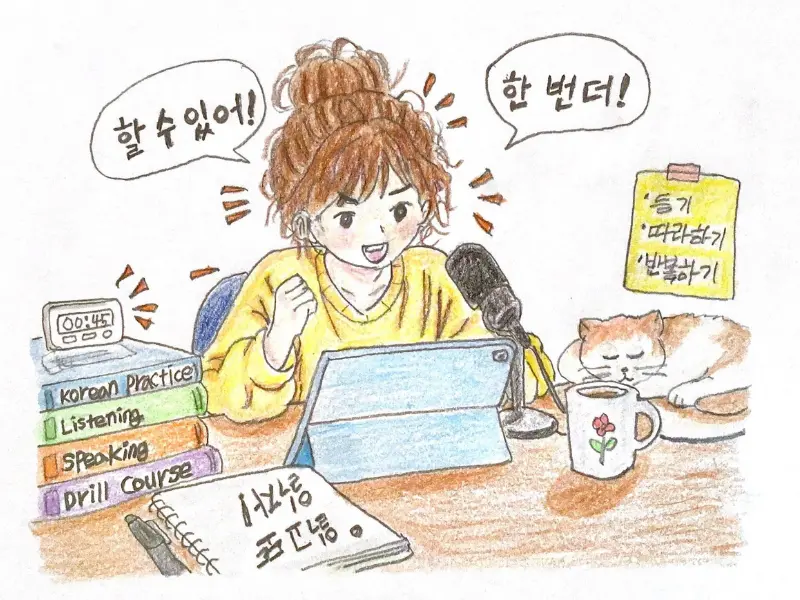
This is the heart of Korean Practice. Through intensive listening and speaking drills, we turn your knowledge into an Automatic Reflex. You will train your ears and mouth until the Korean comes out before you even have time to think.
What you see here is only a glimpse of our training environment. At Korean Practice, every lesson is an interactive drill, not just a lecture. Our system is engineered to bypass conscious thought, ensuring Korean flows from your mouth as a natural reflex.

Step 4: Real-Life Expansion (Harvesting)
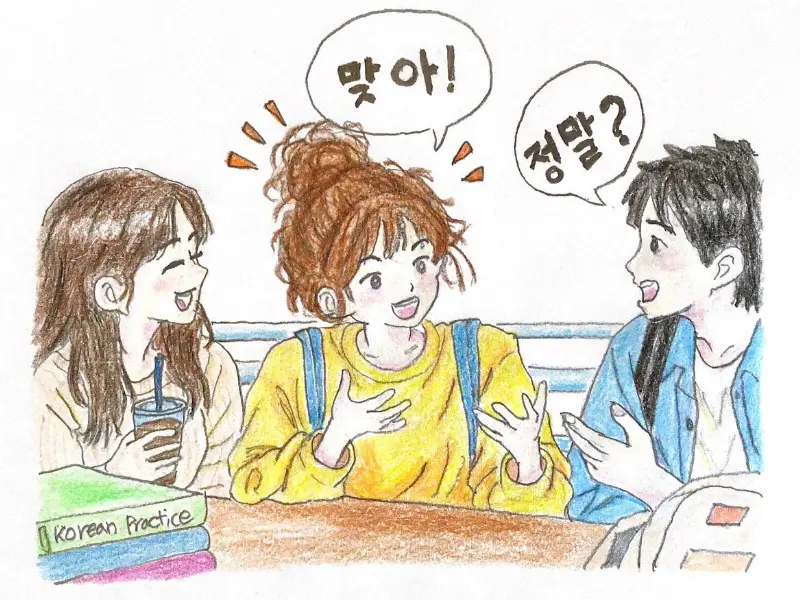
Now, we push your limits. From K-Pop and diverse reading to writing and real-life conversation challenges—we provide endless ways to apply what you’ve trained. This is where your Korean skills truly bloom in the real world.

You have now built a brain that speaks Korean. It’s time to unleash your potential. Whether it’s business, K-Pop, K-Dramas, or daily conversations—take your trained reflexes and show the world what you can do.
The Purest Joy of Learning

The 14-Year Truth
For 14 years in real classrooms, I’ve seen it all. Students didn’t stay with me because I had the fanciest materials or because I could answer every single grammar question perfectly. In fact, they refused to let me go because I did one thing differently: I listened.
It’s Not About Me. It’s About YOU.
Most teachers love to hear themselves talk. I love to hear YOU talk. I spent my years reducing my lectures and maximizing your speaking time. Why? Because I know the truth:

The happiest moment in your learning isn’t solving a complex grammar puzzle—it’s the moment you speak your first real sentence and think, “Wait, I just said that!”
Your Partner in Practice I am not here to be a “perfect teacher” on a screen. I am here to be your Practice Coach. I build the environment where you feel safe to fail, confident to try, and finally, free to speak.
“Stop Studying. Start Training Today.”
Join the community of students who finally found their voice.