Do you ever feel nervous before entering a clothing store in Korea? You might know the word for “dress” or “price,” but real-life shopping is about expressing opinions, asking for sizes, and making decisions.
If you want to shop like a local, you need more than just words. You need to understand the context and the rhythm of the language. That’s why our newest course, “The Birthday Party Dress,” is designed to hardwire these phrases directly into your brain.
Table of Contents
The Secret to Natural Shopping Conversations
Most learners fail at shopping because they memorize isolated words. But in a real boutique, you need to handle situations like:
Asking for a different size or color.
Expressing disappointment politely when something is sold out.
Understanding the nuance of price and value during a family outing.
When you learn Korean through stories, these phrases become emotional memories, not just dry data.
Course Overview: The Birthday Party Dress
This isn’t your average textbook lesson. It’s a heartwarming narrative updated with original pencil drawings and professional native audio.
Level: Intermediate 1 (L1)
Topic: Fashion, Shopping, & Expressing Opinions
Goal: Master natural decision-making in Korean
Content: 7 Engaging Episodes
The KoPra (Korean Practice) Learning System
We don’t just show you a story; we train your brain using our proprietary method.
Story Dive: Immerse yourself with a complete breakdown of every sentence.
Quick Quiz: A fast, fun way to check your understanding.
Final Master: Conquer the “Ultimate Quiz Trio” and achieve total immersion.
👗 A Sneak Peek: Mastering Real Phrases
Here is how we break down real-life shopping dilemmas to install the Korean Engine in your brain.
Quick Preview: We’ve selected 3 key sentences from the story to show you how our system works.
In the actual course, every single sentence is broken down just like this. This allows you to understand exactly how Korean is structured without needing to study complex grammar.
Sentence Breakdown Example #1
🚀 Quick Learning
Original Korean Sentence
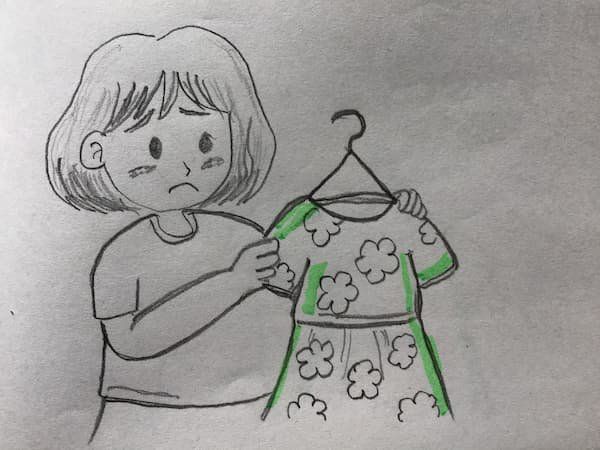
딸: “색깔이 맘에 안 들어.”
Pronunciation Guide
색까리 (saek-gga-ri) 마메 (ma-me) 안 (an) 드러 (deu-reo).
English Translation
I don’t like the color.
Literal Translation
Color doesn’t enter (my) heart.
Quick Reference
색깔이 (the color) 맘에 안 들어 (I don’t like).
🔍 Deep Learning
Meaning and Context
색깔 (color)
이 (subject marker)
맘 (heart, mind)
→ Colloquial contraction of 마음.
에 (to, in)
→ Shows direction into the heart/mind.
안 (not)
들 (to enter; stem of 들다)
어 (casual tone)
→ I’m telling you casually.
Real-Life Usage
“마음에 들다/안 들다” is the fixed expression for liking or not liking something: “이 옷 마음에 들어?” (do you like these clothes?), “별로 마음에 안 들어” (I don’t really like it), “마음에 들면 사” (buy it if you like it). “맘” is the casual spoken form of “마음” commonly used in conversation. This phrase literally means something “enters/doesn’t enter your heart” but translates to “I like it/don’t like it.”
Pattern Practice
1. 이 신발 마음에 들어?
2. 디자인이 맘에 안 들어.
3. 이 집 마음에 들어요.
4. 맛이 맘에 안 들어.
Stop playing house with “easy” methods that don’t work.
Isolated vocabulary and grammar won’t help you speak. You need to understand the core structure first.
1. Breakdown: Master Korean sentence structure with our Story Style Breakdown™.
2. Training: Turn that knowledge into an instant reflex through Brain Rewiring™.
Install the Korean Engine in your brain. Move beyond simple memorization and start speaking with confidence.
Sentence Breakdown Example #2
🚀 Quick Learning
Original Korean Sentence
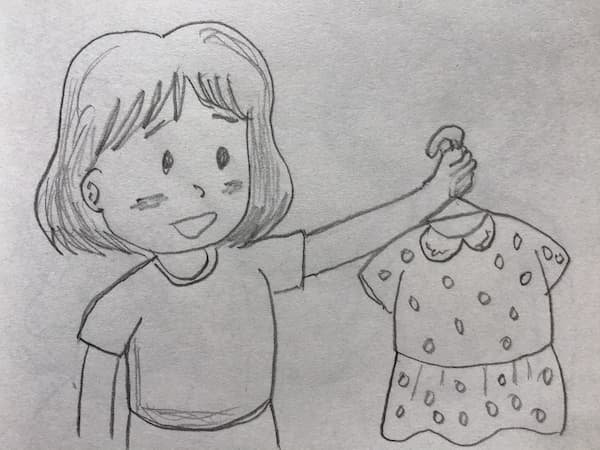
딸: “엄마, 이 옷 귀여워. 가격도 저렴해.”
Pronunciation Guide
엄마 (eom-ma), 이 (i) 옷 (ot) 귀여워 (gwi-yeo-wo). 가격또 (ga-gyeok-ddo) 저렴해 (jeo-ryeom-hae).
English Translation
Mom, these clothes are cute. The price is affordable too.
Literal Translation
Mom, this clothes are cute. Price is also affordable.
Quick Reference
엄마 (mom), 이 (this) 옷 (clothes) 귀여워 (is cute). 가격도 (price too) 저렴해 (is affordable).
🔍 Deep Learning
Meaning and Context
엄마 (mom)
이 (this)
옷 (clothes)
귀엽 (to be cute; stem of 귀엽다)
어 (casual tone)
→ I’m telling you casually.
가격 (price)
도 (also, too)
저렴하 (to be affordable, cheap; stem of 저렴하다)
해 (casual tone)
→ I’m telling you casually.
Pronunciation Flow Tip
– 귀엽 + 어 = 귀여워: When rapidly pronounced, ‘귀엽’ and ‘어’ naturally combine to form ‘귀여워’. ㅂ irregular change.
– 하 changes to 해
Real-Life Usage
“귀엽다” means “cute” and is widely used in Korean for clothing, animals, children, and even adults: “너무 귀여워!” (so cute!), “귀여운 강아지” (cute puppy).
Pattern Practice
1. 이 옷 너무 귀엽다!
2. 난 귀여운 캐릭터가 좋아.
3. 우리집 고양이 아주 귀여워요.
4. 저 남자 귀엽지 않아?
Sentence Breakdown Example #3
🚀 Quick Learning
Original Korean Sentence
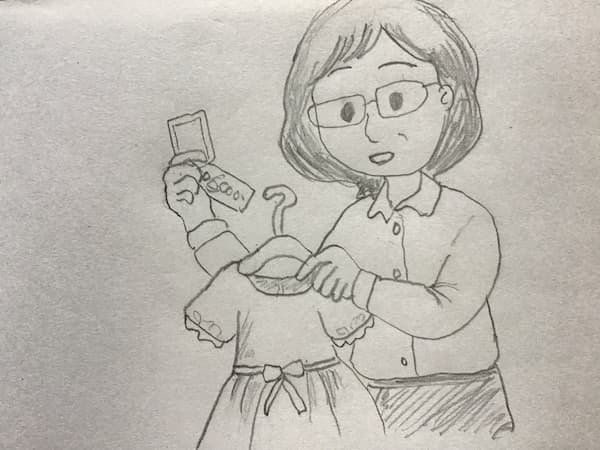
엄마: “가격이 얼마니?”
Pronunciation Guide
가겨기 (ga-gyeo-gi) 얼마니 (eol-ma-ni)?
English Translation
How much is it?
Literal Translation
How much is price?
Quick Reference
가격이 (the price) 얼마니 (how much)?
🔍 Deep Learning
Meaning and Context
가격 (price)
이 (subject marker)
얼마 (how much)
→ Used to ask about price or amount.
니 (casual question)
→ I’m asking in a soft, casual way (often used by women or to children).
Real-Life Usage
“얼마” is the essential word for asking “how much”: “이거 얼마예요?” (how much is this?), “얼마나 걸려?” (how long does it take?).
Pattern Practice
1. 이거 얼마니?
2. 그거 어디에서 샀니?
3. 얼마나 오래 걸리니?
4. 요즘 바쁘니?
What Will You Learn?
By joining this Korean story course, you will gain practical skills you can use immediately in the real world:
Real-Life Fluency: Navigate department stores, boutiques, and restaurants like a local. No more “pointing and nodding.”
Essential Shopping Vocab: Master words for fashion, sizes, and colors—from “Sold out” (다 팔렸어요) to “Do you have this in a larger size?”
Natural Decision-Making: Learn how to express your likes and dislikes politely. Perfect the art of saying “I don’t like this color” without sounding rude.
Cultural Context: Understand Korean family dynamics and the “Meat Buffet” culture through an engaging narrative.
Bridge to Intermediate: Transition from simple sentences to complex expressions used in daily decision-making.
Stop Studying, Start Training!
The Brutal Truth: Korean is a unique system. You cannot master it by memorizing isolated rules. Traditional methods often lead to exhaustion without results.
Our Solution:
Concise Theory: We skip boring lectures and get straight to the point.
Immediate Practice: No more passive listening—start training your brain right away.
Hardwiring through Stories: We focus on embedding the language into your brain through immersive storytelling.
Ready to find your perfect Korean “fit”?
Don’t let “shopping anxiety” hold you back. Experience the best Intermediate Korean Reading Practice and see how fast you can progress when the story leads the way.
🌟 [Enroll Now: Experience the Birthday Dress Story]
FAQs (What You Might Still Wonder About)
1. Is this course helpful for learning Korean shopping phrases?
Absolutely! While textbooks give you lists, our story shows you how to use Korean shopping phrases in real-life situations. You’ll learn how to ask for sizes, check colors, and even understand price nuances within a natural family narrative.
2. I’m a beginner. Is the “Birthday Party Dress” story too difficult?
This course is officially leveled for Intermediate 1 (I1) learners, but here’s the KoPra difference: Every course we offer is designed to be accessible to anyone. Because we break down every single sentence through our Story Style Breakdown™ method, you can understand and follow along even without advanced grammar knowledge. Feel free to dive into this intermediate Korean reading practice at your own pace—our system ensures the logic is clear from the very first sentence.
3. How does this course help me learn Korean vocabulary for clothes?
Instead of flashcards, we use “Contextual Immersion.” You will master Korean vocabulary for clothes (like ‘긴팔’, ‘한 벌’, ‘사이즈’) by seeing them used in the story’s fashion dilemmas. When you connect a word to a character’s emotion, you never forget it.
4. Can I really learn how to shop in Korea through this story?
Yes. The story covers everything from navigating a department store (백화점) to finding hidden gems in a local boutique. You’ll gain the confidence to how to shop in Korea by mimicking the natural dialogues used by the characters in the story.
5. What is the benefit of choosing to learn Korean through stories?
When you learn Korean through stories, you aren’t just memorizing; you’re “experiencing.” Our Story Style Breakdown™ method helps you absorb sentence structures as a reflex. This is much more effective than dry grammar lectures because it installs the “Korean Engine” in your brain.
6. Is there audio support for pronunciation practice?
Yes! Every episode features professional native audio. As our student Sabina pointed out, this is crucial for improving not just pronunciation but also intonation. You can listen and shadow each sentence to sound like a real native speaker.
7. Does the course include any visual aids?
Yes, the updated “Birthday Party Dress” course features original hand-drawn pencil illustrations. These visuals help you connect the Korean shopping phrases to the specific situations, making your learning experience more immersive and enjoyable.
Final words
Learning Korean shouldn’t be a chore. By choosing to learn Korean through stories, you get an experience that actually sticks. The “Birthday Party Dress” course is your gateway to mastering Korean shopping phrases naturally through real narratives and native audio.
Whether you need intermediate Korean reading practice or want to expand your Korean vocabulary for clothes, KoPra is here to help. Stop struggling with dry textbooks. Start training your brain to how to shop in Korea with confidence.
Ready to find your perfect Korean “fit”? Let’s turn your goals into reality. See you inside!