Many people want to learn Korean with K-dramas. It sounds fun and easy, right? Just watch your favorite Korean shows and magically understand Korean! But here’s the truth: this method doesn’t work for most learners. And the “listening first” approach that many language experts recommend? It’s completely unrealistic for adult learners.
Table of Contents
The Big Problem with “Listening First” Methods
Language experts love to say “start with listening, just like babies do.” Even famous linguists promote this idea. But this advice is purely theoretical and ignores the real situation of adult learners.
Think about it: How can an adult learner sit through hours of Korean dramas without understanding a single word? Babies have 24/7 exposure to language with parents constantly explaining things. Adults have limited time and need efficient methods.
Korean drama language learning sounds appealing, but it’s setting you up for failure. Korean dramas are full of:
1. Complex vocabulary
2. Slang and informal speech
3. Curse words and inappropriate expressions
4. Advanced grammar structures
5. Cultural references you won’t understand
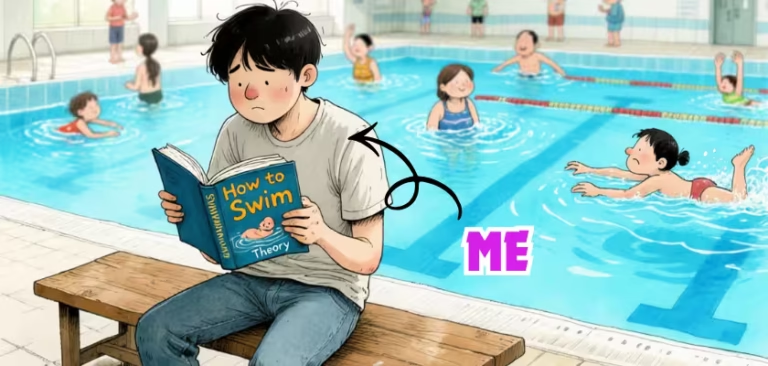
How is a beginner supposed to learn from this chaos? It’s like throwing someone into the deep end of a pool when they can’t swim.
Language researchers like Paul Nation and Stephen Krashen agree that input must be comprehensible — not just noise.
The Reality Check: Adults Are Not Babies
The “listen like a baby” method is the most ridiculous advice in language learning. Here’s why:
Babies have developing brains specifically designed for language acquisition
Adults have analytical thinking that can speed up learning through reading
Babies get constant feedback from parents – you’re watching dramas alone
Adults have limited time – we need efficient methods, not time-wasting approaches
When experts ignore these facts, they’re doing learners a huge disservice.
Why Is Korean So Hard to Learn? The Hidden Reason Nobody Talks About

The Truth About Korean Drama Learning
Don’t get me wrong – Korean dramas can be useful for advanced learners. I love K-dramas too — but they’re a reward for after you build a foundation. But for beginners? It’s a waste of time. You’ll spend hours hearing sounds without meaning, getting frustrated, and eventually giving up.
“But I Can Use Subtitles and Dictionaries!”
Some people argue: “I can watch my favorite drama with subtitles, look up words, and translate everything!” This sounds logical, but it’s actually a terrible learning strategy. Here’s why:
1. You’re not really listening
You’re reading subtitles, not processing Korean audio. Your brain focuses on the text, ignoring the sounds completely. While subtitles can be helpful for listening practice sometimes, the best listening results come from listening without subtitles, not while reading text.
Here’s a reality check: I sometimes watch Korean dramas on Netflix, and the actors perform so realistically that their pronunciation becomes incredibly difficult to understand. They’re so immersed in their acting that I – a native Korean speaker – often can’t understand what they’re saying! I have to replay scenes multiple times and still need subtitles to figure out what they said.
I tell my Korean students about this all the time: “If I can’t understand what they’re saying, how hard must it be for you?” Are you really going to struggle desperately trying to understand speech that even native Korean speakers can’t catch? This shows how unrealistic drama-based learning truly is!
How to Learn Korean at Home for Free — My Honest Teacher Tips
2. It’s incredibly inefficient
Pausing every few seconds to look up words destroys the flow. You spend more time with dictionaries than actually learning. This is the worst approach. Stop, listen, pause, read, look up words, then continue?
It’s like exercising, suddenly eating, then exercising again, then suddenly doing makeup. Focus on one thing at a time. Most words you look up in dictionaries are forgotten anyway. Dictionaries give you instant understanding, but they don’t build your vocabulary.
3. You learn random, disconnected words
Drama vocabulary is all over the place. You need to master basic words first: eat, go, like, food, clothes, etc. Suddenly learning words like “prison,” “rape,” “adultery,” or “murder” from dramas is extremely difficult because these advanced words can’t connect to your basic vocabulary foundation.
4. You miss proper pronunciation
While you’re busy reading subtitles and looking up words, you’re not connecting sounds to meanings. Good pronunciation comes from consistent, repeated reading and continuous listening practice. Jumping back and forth between different activities only makes your brain tired.
5. It’s not sustainable
This method is exhausting. Most people give up after a few episodes because it’s too slow and frustrating. The worst thing about drama learning is that it’s not sustainable. You’ll get tired quickly.
The key to language acquisition is consistency. Only intermediate or advanced learners have the mental capacity to listen to dramas continuously. Even intermediate learners find it difficult to learn from dramas.
“Stop planting seeds on frozen soil.”
Most platforms just throw “seeds” at you—random vocabulary and grammar. But without tilling your Brain Soil, nothing grows.
Our Original Story Style Breakdown™ melts the ice and tills your soil through structural understanding.
Once the ground is ready, our high-intensity Brain Rewiring™ turns that knowledge into an instant speaking reflex.
Stop playing house with “easy” methods. Install the Korean Engine in your brain. Till your soil, train your mind, and finally start speaking with power.
Stop Wasting Time on Unrealistic Methods
It’s time to be honest about language learning. The “listening first” crowd is giving you advice that sounds good in theory but fails in practice. They’re not considering:
Your busy adult life
Your need for efficient learning
Your analytical thinking abilities
Your limited patience for meaningless input
It’s okay to enjoy K-dramas — just don’t rely on them as your main learning tool.
Learn Korean Through Stories: Why It Works Better Than Grammar Books
Why Reading Should Come First
Here’s what actually works: Korean reading practice should be your foundation. When you read Korean:
You control the pace – You can stop, look up words, and understand grammar
Visual learning is easier – Your brain processes written information more efficiently
You build vocabulary systematically – No random slang or confusing expressions
You understand sentence structure – Grammar patterns become clear
This isn’t just my opinion. It’s based on how adult brains actually learn languages.
One of my students switched from dramas to story reading. Within 2 months, her comprehension improved dramatically.
How to Read Korean Faster: Speed Reading Strategies That Really Work
How to Learn Korean Effectively: The Right Way
Want to know how to learn Korean effectively? Here’s the method that actually works:
Step 1: Start with Level-Appropriate Reading
Begin with simple Korean stories at your level. Don’t jump into complex dramas. Find interesting stories with:
Basic vocabulary
Simple grammar
Engaging plots
Clear sentence structures
Step 2: Add Listening Gradually
After you understand the story through reading, THEN listen to the audio version. This way:
You already know the meaning
You can focus on pronunciation
You connect sounds to words you understand
You build confidence step by step
Step 3: Level Up Systematically
Gradually increase difficulty. Move from simple stories to more complex content. Only when you have a solid foundation should you attempt Korean dramas.
Why You’re Still Struggling With Korean Grammar (And What to Do About It)
Why Story-Based Learning Works
The story-based approach is perfect for Korean learners because:
Stories are engaging – You stay motivated
Context helps understanding – You learn words in meaningful situations
Progressive difficulty – You build skills step by step
Reading + listening combination – You get both skills without overwhelming yourself
This method respects your intelligence as an adult learner while being practical about your time constraints.
FAQs (What You Might Still Wonder About)
1. Can I learn Korean with K-dramas and reading at the same time?
Yes — but timing matters. Beginners should focus on Korean reading practice first, then gradually add Korean drama language learning once they’ve built a foundation. Watching dramas too early often leads to confusion, not progress.
2. Why does everyone say listening first is more “natural”?
That advice comes from how babies learn languages, but adults aren’t babies. For adults, reading builds vocabulary faster and helps you understand what you hear later. That’s why, if you want to know how to learn Korean effectively, reading should come first.
3. What if I only enjoy watching K-dramas?
You’re not alone! If you love dramas, you can absolutely use them for motivation. But try combining them with structured Korean reading practice — like reading the drama scripts first or studying sentence breakdowns. This mix is more effective than just passive watching.
4. Is there a “right” ratio of reading vs. listening when learning Korean?
For beginners, a 70:30 balance (more reading than listening) is ideal. As your comprehension improves, you can shift toward listening. The Korean reading vs listening balance should change depending on your level and confidence.
5. I learned Japanese by watching anime — why doesn’t this work for Korean?
It’s possible to pick up bits of language through repetition and immersion, but Korean drama language learning includes more complex speech, slang, and cultural references. That’s why reading-based methods are more practical for most Korean learners.
6. Are there any reading-focused K-drama resources available?
Yes! Some sites and YouTube channels offer subtitle scripts or line-by-line K-drama transcripts. You can also create your own Korean reading practice routine by transcribing short scenes and looking up grammar patterns — or use structured courses with built-in reading + listening.
7. What’s the fastest way to learn Korean if I’m short on time?
Start with structured stories made for learners. Avoid dramas until you’ve mastered sentence basics. If you’re wondering how to learn Korean effectively, consistent reading of well-designed materials (with breakdowns) is far more time-efficient than watching hours of shows without context.
Final words
If you want to learn Korean with K-dramas eventually, start with reading first. Build your foundation with level-appropriate stories, then add listening practice. This reading-first approach is:
More realistic for adults
More efficient with your time
More likely to lead to actual progress
More respectful of your intelligence
Stop following advice that treats you like a baby. Start with reading, progress systematically, and watch your Korean skills actually improve. Your future self will thank you for choosing the method that works instead of the one that just sounds good.
Ready to start learning Korean the right way? Begin with simple stories at your level, master the basics through reading, and then gradually add listening practice. This is how adult learners actually succeed.