Why This Korean Ghost Story Is Perfect for Language Learners
Many Korean learners dream of understanding real stories — not just grammar drills or textbook dialogues. That’s why story-based learning is so effective. And when the story is scary? You remember it even better.
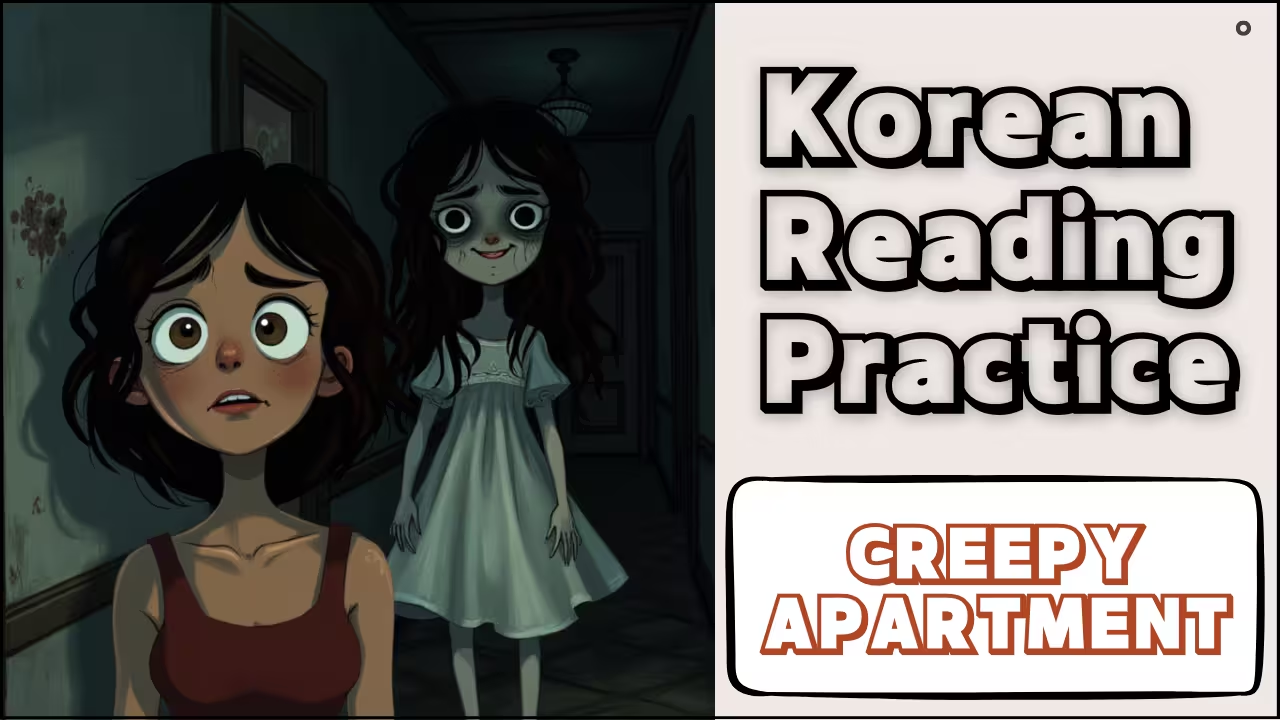
In this post, you’ll experience a Korean ghost story comic based on everyday language, but with a creepy twist. It’s beginner-friendly, written in natural Korean, and includes an English translation.
This is not just a passive story — it’s a language learning experience. Watch the video, then read through each sentence to understand how Korean works in real context. You’ll improve your reading, listening, and sentence comprehension — all while getting chills.
Watch: Creepy Apartment – A Korean Horror Story Comic
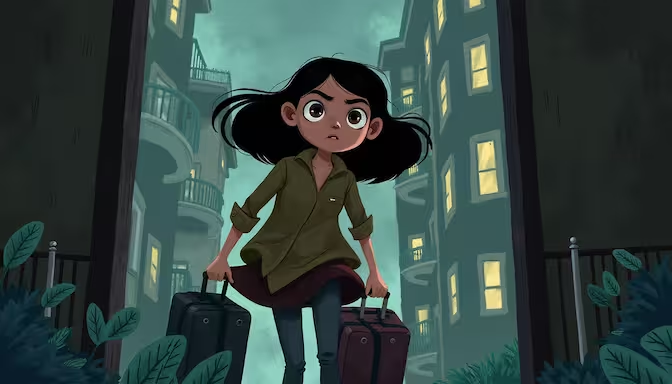
In this Korean horror story, the main character moves into a new apartment. But at night, strange sounds begin to echo from upstairs. What’s making the noise? Who — or what — lives above? The truth is more frightening than you expect…
This Korean ghost story comic uses simple vocabulary, natural grammar patterns, and real-life expressions — perfect for learners who want to absorb the language in a more engaging way.
Start the Free Course
Still wondering how to read Korean?
This isn’t just another beginner lesson. It’s a complete system designed to change the way you think about Korean — from struggling with letters to reading real sentences, understanding the language, and speaking out loud with confidence.
Story Style Breakdown™ (Example Sentence)
Let’s break down the first sentence using our Story Style Breakdown™ so you can really understand it:
Original Korean Sentence
나는 새 아파트로 이사했어요.
Pronunciation Guide
나 (na) 는 (neun) 새 (sae) 아파트로 (a-pa-teu-ro) 이사했어요 (i-sa-hae-sseo-yo)
Meaning and Context
나 (I) 는 (topic marker) 새 (new) 아파트 (apartment) 로 (to) 이사했어요 (moved; polite)
English Translation
I moved to a new apartment.
Literal Translation
I moved to new apartment.
Original Korean Sentence
사무실에 갔는데, 윗집은 빈집이래요.
Pronunciation Guide
사무실에 (sa-mu-si-re) 갔는데 (gat-neun-de), 윗집은 (wit-ji-beun) 빈집이래요 (bin-ji-bi-rae-yo).
Meaning and Context
사무실 (office) 에 (to) 갔 (went) 는데 (and) 윗집 (upstairs house) 은 (topic) 빈집 (empty house) 이래요 (they say; polite).
English Translation
I went to the office, and they said the upstairs unit is empty.
Literal Translation
(I) went to office, and they said upstairs house is empty house.
💡 This is just a simple sample of the Story Style Breakdown™. In my full course, each sentence comes with even more details, variations, and deeper explanations to help you truly understand and use Korean naturally.
How to Learn Korean with Scary Stories
You might be wondering: Why horror stories? Here’s why this method works so well:
✅ 1. Emotions Boost Memory
Scary stories trigger real emotions — surprise, fear, suspense. And emotions increase retention. You’re much more likely to remember vocabulary and sentence patterns if they’re tied to strong feelings.
✅ 2. Stories Teach Context
Every sentence in a story has clear context — who is speaking, what’s happening, and why. That makes grammar easier to understand than in isolated practice sentences.
✅ 3. Repetition Without Boredom
When a story is engaging, learners re-read and re-listen naturally. That repetition builds fluency without feeling like study.
✅ 4. Natural Korean Exposure
Instead of scripted textbook lines, you’re hearing Korean the way it’s used in storytelling — with real structure, transitions, and mood.
Start the Story Course
Looking for super easy way to learn Korean?
Most Korean courses stop at grammar. Mine goes beyond — with stories, Story Style Breakdown™, and real practice to help you speak.
What You’ll Learn from This Story
- Real beginner-level Korean sentence structure
- Past tense patterns used in everyday storytelling
- Common verbs like “move,” “hear,” “go up,” “get scared”
- Descriptive language that appears in horror or suspense conversations
- How to describe strange sounds or unexplained events
All of this is taught through a short, memorable narrative — with no need for complicated grammar charts.
A Korean Scary Story in English & Hangul
Whether you’re reading this on your commute or watching the video on repeat, you’re learning Korean naturally. All sentences include both Hangul and English, so you can build connections between the two without stress.
This is exactly what we mean when we say “learn Korean with scary stories” — exciting, real, and unforgettable.
If you’re tired of textbook-style learning, this is the refreshing approach you’ve been looking for.
Tips for Getting the Most from This Ghost Story
- Watch the video once without pausing – Just get the feel of the story.
- Read each sentence slowly – Try to pronounce each part out loud.
- Look for repeated patterns – Verbs, particles, and word order.
- Rewatch and shadow – Repeat after the audio to improve speaking.
- Retell the story – Can you summarize what happened in Korean?
FAQs (What You Might Still Wonder About)
1. ❓ Is this Korean ghost story really beginner-friendly?
Yes! Even though it’s a creepy story, the sentences are simple and use everyday Korean. If you’re a beginner, you can read it step by step with the English translation and learn without feeling overwhelmed.
2. ❓ Can I understand this Korean horror story without knowing Hangul?
You can follow the plot through the English translation first, but you’ll learn much more if you try reading the Hangul too. That’s why this Korean ghost story comic includes both Korean and English side by side, making it easier to connect the words.
3. ❓ How is learning Korean with scary stories different from normal stories?
Scary stories are more memorable because they trigger emotion and suspense. When you read a Korean scary story in English and Hangul, you naturally remember the vocabulary and sentence patterns better than boring textbook phrases.
4. ❓ Will this story teach slang or formal Korean?
This Korean horror story mostly uses simple, neutral language — the kind you’d use in daily conversation. It’s not full of slang, so beginners won’t get confused, but it still feels natural and realistic.
5. ❓ Can I improve my listening skills with this ghost story?
Yes! After reading the text, you can listen to the story’s audio. Because you already know what’s happening, you’ll recognize the words more easily. This is one of the best ways to learn Korean with scary stories without feeling lost.
6. ❓ Are there more Korean ghost stories like this one?
Definitely! There are other short Korean horror stories and comics that are just as simple and fun for language learning. Many learners enjoy reading a series of scary stories because they’re short, suspenseful, and easy to revisit for practice.
7. ❓ I don’t like very scary content — is this okay for me?
Yes, this ghost story is spooky but not extreme. It’s more mysterious than terrifying. If you enjoy mild suspense, you’ll like this. It’s perfect for anyone who wants to experience a Korean ghost story without getting too scared.
Final words: Korean Ghost Stories as a Learning Tool
This Korean ghost story isn’t just entertainment — it’s a powerful learning tool.
It helps you:
- Build grammar and vocabulary naturally
- Stay emotionally engaged
- Understand sentence structure in context
- Practice both reading and listening at once
Whether you’re into horror or just want to try a different way to study, scary stories are one of the most effective (and underrated) tools for language learning.
So go ahead — press play, follow along with the sentences, and enjoy learning Korean in the spookiest way possible.