
The Korean word for “bed” is “침대” (chimdae). If you searched for “Bed in Korean,” here is your quick answer: 침대 (chimdae) is the correct and most commonly used term. Whether you’re furnishing a room in Korea or simply learning Korean vocabulary, knowing the word 침대 will help you talk naturally about bedrooms.
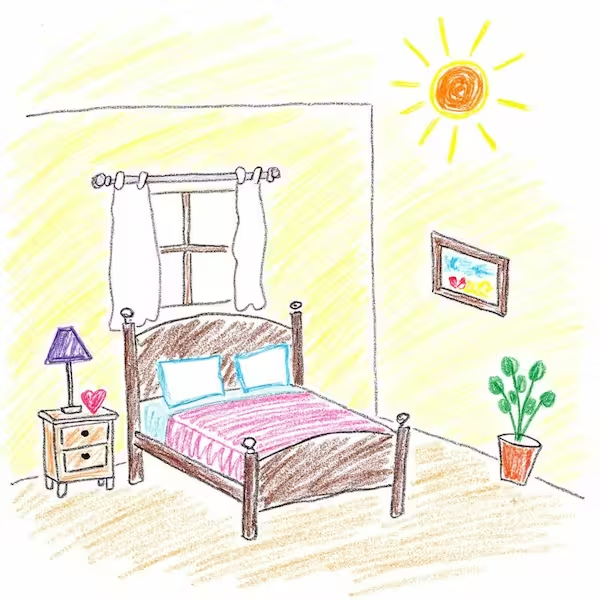
But learning only the word “Bed in Korean” isn’t enough — bedrooms include many useful items and expressions that appear in everyday life. Understanding this vocabulary can make your conversations smoother, your travel experiences easier, and your Korean learning more fun.
👉 Scroll down to discover 10 must-know bedroom words, helpful phrases, and easy examples using “침대 (chimdae)” and related vocabulary.
Let’s make your Korean learning comfortable — just like a good 침대!
Follow These Steps
Step 1: Listen & Shadow
Follow the audio and speak along with the highlighted text.
Step 2: Check & Learn
Use the breakdowns to understand grammar, vocab, and meaning.
Go Deeper
STEP 1 Listen & Shadow
Click play and speak along with the highlighted text below
Table of Contents
STEP 2 Check & Learn
Bed (침대)
When learning Korean bedroom vocabulary, “침대” (chimdae) is your foundation word. Just as a bed in Korean homes often reflects the balance between traditional ondol sleeping systems and modern Western styles, understanding this term opens doors to deeper cultural insights. Korean learners often start with furniture words like this because they’re practical for daily conversations—whether you’re apartment hunting in Seoul, shopping at IKEA Korea, or describing your living space to Korean friends.
Example Sentence
Original Korean Sentence
아침에 일어나자마자 침대를 정돈하는 습관이 있어.
Pronunciation Guide
아침에 (a-chi-me) 일어나자마자 (i-reo-na-ja-ma-ja) 침대를 (chim-dae-reul) 정돈하는 (jeong-don-ha-neun) 습관이 (seup-ggwa-ni) 있어 (it-sseo).
Meaning and Context
아침 (morning) 에 (in) 일어나 (to wake up) 자마자 (as soon as) 침대 (bed) 를 (my object is the bed) 정돈하는 (tidying up) 습관 (habit) 이 (my subject is a habit of tidying up) 있 (to have) 어 (I’m telling you casually).
English Translation
I have a habit of tidying up the bed as soon as I wake up in the morning.
Literal Translation
(I) have habit tidying up bed as soon as (I) wake up in morning.
✍️ Related: Nature in Korean: 19 Beautiful Korean Words You Should Know
Still wondering how to read Korean?
Dressing Table (화장대)
The “화장대” (hwajangdae) represents more than just Korean furniture words—it’s a window into Korean beauty culture. While mastering korean bedroom vocabulary, you’ll notice that dressing tables hold special significance in Korean homes, often featuring well-organized skincare and makeup collections. This piece of furniture connects language learning with Korea’s famous beauty routines, making it an essential term for anyone looking to learn Korean bedroom terminology authentically.
Example Sentence
Original Korean Sentence
화장대에 거울을 달았어요.
Pronunciation Guide
화장대에 (hwa-jang-dae-e) 거울을 (geo-u-reul) 달았어요 (da-rat-sseo-yo).
Meaning and Context
화장대 (dressing table) 에 (on) 거울 (mirror) 을 (my object is a mirror) 달 (to hang) 았 (past tense) 어요 (I’m telling you polite and friendly).
English Translation
I hung a mirror on the dressing table.
Literal Translation
(I) hung mirror on dressing table.
✍️ Related: 12 Essential Korean Living Room Vocabulary and Phrases
Mattress (매트리스)
Understanding “매트리스” (maeteuriseu) is crucial when you learn Korean bedroom essentials because mattress preferences differ significantly between Korean and Western cultures. Traditional Korean homes used thin yo (요) mats on heated floors, but modern apartments embrace Western-style beds. This vocabulary bridges traditional and contemporary Korean home vocabulary, helping you navigate everything from hotel stays to furniture shopping in Korea.
Example Sentence
Original Korean Sentence
매트리스에 이불과 베개를 깔았어요.
Pronunciation Guide
매트리스에 (mae-teu-ri-seu-e) 이불과 (i-bul-gwa) 베개를 (be-gae-reul) 깔았어요 (gga-rat-sseo-yo).
Meaning and Context
매트리스 (mattress) 에 (on) 이불 (blanket) 과 (and) 베개 (pillow) 를 (my object is a blanket and pillow) 깔 (to place) 았 (past tense) 어요 (I’m telling you polite and friendly).
English Translation
I placed a blanket and pillow on the mattress.
Literal Translation
(I) placed blanket and pillow on mattress.
✍️ Related: Speak 12 Hobbies in Korean with Confidence
Pillows (베개)
“베개” (begae) is more than just korean furniture words—it’s tied to Korean sleep culture. Korean pillows traditionally included buckwheat-filled options, reflecting herbal medicine principles. When building your korean bedroom vocabulary, knowing pillow-related terms helps you understand product descriptions in Korean stores, read reviews on Coupang, and discuss sleep comfort preferences with native speakers, making it practical vocabulary for daily life.
Example Sentence
Original Korean Sentence
그 여자는 베개를 꼭 안았어.
Pronunciation Guide
그 (geu) 여자는 (yeo-ja-neun) 베개를 (be-gae-reul) 꼭 (ggok) 안았어 (a-nat-sseo).
Meaning and Context
그 (that) 여자 (woman) 는 (my topic is she) 베개 (pillow) 를 (my object is the pillow) 꼭 (tightly) 안 (to hug) 았 (past tense) 어 (I’m telling you casually).
English Translation
She hugged the pillow tightly.
Literal Translation
That woman hugged pillow tightly.
✍️ Related: 8 To Eat in Korean – Clear & Structured Examples
Want the easiest way to understand and speak Korean?
My courses include:
→ Story lessons with MORE powerful breakdowns
→ Speaking, dictation & shadowing practice + much more
→ Interactive quizzes
🎁 7-day trial included with subscription
Bed Sheets (침대 시트)
As you learn Korean bedroom terminology, “침대 시트” (chimdae siteu) becomes essential for household shopping. Korean bedding culture emphasizes seasonal changes—lighter materials for humid summers and warmer options for winter. This korean home vocabulary helps you understand product labels, care instructions, and seasonal recommendations when shopping at Korean homeware stores like Daiso or online platforms.
Example Sentence
Original Korean Sentence
이 침대 시트는 민감한 피부에 안전합니다.
Pronunciation Guide
이 (i) 침대 (chim-dae) 시트는 (si-teu-neun) 민감한 (min-gam-han) 피부에 (pi-bu-e) 안전합니다 (an-jeon-ham-ni-da).
Meaning and Context
이 (this) 침대 (bed) 시트 (sheet) 는 (my topic is these bed sheets) 민감한 (sensitive) 피부 (skin) 에 (to) 안전하 (to be safe) ㅂ니다 (I’m telling you in a polite and formal way). * 안전하 + ㅂ니다 = 안전합니다
English Translation
These bed sheets are safe for sensitive skin.
Literal Translation
This bed sheet is safe to sensitive skin.
✍️ Related: How to Say Yes and No in Korean – 8 Easy Examples Explained
Duvet or Comforter (이불)
“이불” (ibul) is a cornerstone of korean bedroom vocabulary that connects to Korean seasonal living. Unlike Western duvets with covers, traditional Korean ibul often comes as a complete unit. When you learn Korean bedroom terms, understanding “이불” helps you grasp cultural concepts like 이불 빨래 (ibul ppallae, blanket washing day) and seasonal bedding changes, enriching your cultural competency alongside language skills.
Example Sentence
Original Korean Sentence
여름에는 가벼운 이불이 좋습니다.
Pronunciation Guide
여름에는 (yeo-reu-me-neun) 가벼운 (ga-byeo-un) 이불이 (i-bu-ri) 좋습니다 (jot-seum-ni-da).
Meaning and Context
여름 (summer) 에 (in) 는 (my topic is for summer) 가벼운 (light) 이불 (duvets) 이 (my subject is light duvets) 좋 (to be good) 습니다 (are; I’m telling you in a polite and formal way).
English Translation
Light duvets are good for summer.
Literal Translation
Light duvets are good in summer.
✍️ Related: Body Parts in Korean: A Comprehensive Guide
Blankets (담요)
Learning “담요” (damyo) expands your korean furniture words into textile territory. Korean homes often layer bedding—sheets, ibul, and damyo—creating adjustable warmth levels. This korean bedroom vocabulary is practical for understanding Korean weather preparation, as locals often discuss 담요 한 장 더 (one more blanket) during cold snaps, making it conversational vocabulary you’ll actually use.
Example Sentence
Original Korean Sentence
담요로 몸을 감싸고 따뜻하게 자요.
Pronunciation Guide
담요로 (dam-yo-ro) 몸을 (mo-meul) 감싸고 (gam-ssa-go) 따뜻하게 (dda-ddeut-ta-ge) 자요 (ja-yo).
Meaning and Context
담요 (blanket) 로 (with) 몸 (body) 을 (my object is my body) 감싸 (to wrap) 고 (and) 따뜻하 (to be warm) 게 (ly) 자 (to sleep) 아요 (I’m telling you polite and friendly). * 자 + 아요 = 자요
English Translation
I wrap myself in a blanket and sleep warmly.
Literal Translation
(I) wrap body with blanket and sleep warmly.
✍️ Related: Cardinal Directions in Korean with Super Easy 18 Examples
Dresser (서랍장)
“서랍장” (seorapjang) is practical korean home vocabulary for anyone furnishing a Korean apartment. Korean dressers often feature space-efficient designs reflecting compact urban living. As you learn Korean bedroom terminology, this word helps you navigate furniture assembly instructions, discuss storage solutions with roommates, or understand real estate listings that mention built-in storage options.
Example Sentence
Original Korean Sentence
저는 서랍장 위에 거울을 놓아서 메이크업을 할 수 있어요.
Pronunciation Guide
저는 (jeo-neun) 서랍장 (seo-rap-jjang) 위에 (wi-e) 거울을 (geo-u-reul) 놓아서 (no-a-seo) 메이크업을 (me-i-keu-eo-beul) 할 (hal) 수 (su) 있어요 (it-sseo-yo).
Meaning and Context
저 (I; in a humble way) 는 (my topic is myself) 서랍장 (dresser) 위에 (on top of) 거울 (mirror) 을 (my object is a mirror) 놓 (to place) 아서 (so) 메이크업 (makeup) 을 (my object is makeup) 하 (to do) ㄹ 수 있 (can) 어요 (I’m telling you polite and friendly).
English Translation
I placed a mirror on top of the dresser, so I can do my makeup.
Literal Translation
I place mirror on top of dresser, so (I) can do makeup.
✍️ Related: You in Korean Language: 7 Ways with Examples Explained
Wardrobe or Closet (옷장)
The term “옷장” (otjjang) is essential korean bedroom vocabulary because Korean closet culture differs from Western walk-in closets. Korean apartments typically feature built-in wardrobes or freestanding units. Understanding this korean furniture words helps you discuss storage needs, organize seasonal clothing changes (의류 교체), and communicate about household organization—all practical scenarios for language learners.
Example Sentence
Original Korean Sentence
옷장 안에는 다양한 스타일의 옷들이 있어요.
Pronunciation Guide
옷장 (ot-jjang) 안에는 (a-ne-neun) 다양한 (da-yang-han) 스타일의 (seu-ta-i-re) 옷들이 (ot-ddeu-ri) 있어요 (it-sseo-yo).
Meaning and Context
옷장 (wardrobe) 안 (inside) 에 (in) 는 (my topic is inside the wardrobe) 다양한 (various) 스타일 (style) 의 (of) 옷들 (clothes) 이 있 (there are) 어요 (I’m telling you polite and friendly).
English Translation
There are various styles of clothes inside the wardrobe.
Literal Translation
There are various style of clothes in inside wardrobe.
✍️ Related: Taste in Korean: Complete Guide to 5 Flavors
Full-Length Mirror (전신거울)
“전신거울” (jeonsingeoul) completes your korean bedroom vocabulary toolkit. In Korean fashion culture, full-length mirrors are considered essential furniture, often positioned near entrances for final outfit checks. When you learn Korean bedroom terms, this vocabulary connects to Korean lifestyle concepts like 오늘의 룩 (today’s look), making it relevant for fashion discussions and daily life conversations with Korean speakers.
Example Sentence
Original Korean Sentence
저는 매일 아침 전신 거울을 이용해서 옷을 확인해요.
Pronunciation Guide
저는 (jeo-neun) 매일 (mae-il) 아침 (a-chim) 전신 (jeon-sin) 거울을 (geo-u-reul) 이용해서 (i-yong-hae-seo) 옷을 (o-seul) 확인해요 (hwa-gin-hae-yo).
Meaning and Context
저 (I; in a humble way) 는 (my topic is myself) 매 (every) 일 (day) 아침 (morning) 전신 (full-length) 거울 (mirror) 을 (my object is a full-length mirror) 이용해서 (using) 옷 (outfit) 을 (my object is my outfit) 확인하 (to check) 해요 (I’m telling you polite and friendly). * 확인하 -> 확인해
English Translation
I use a full-length mirror every morning to check my outfit.
Literal Translation
I check outfit using full-length mirror every day morning.
✍️ Related: Blind Date in Korean: Learn the Word Sogaeting and Korean Dating Culture
FAQs (What You Might Still Wonder About)
Why do many Koreans still sleep on the floor instead of using a bed in Korean homes?
When you learn Korean bedroom vocabulary, understanding floor sleeping culture is essential. Traditional Korean homes feature ondol heating systems—underfloor heating that warms the entire floor—making floor sleeping comfortable and practical. About 43% of Koreans still sleep on the floor occasionally, especially among older generations. USCBMy Korean Addiction Koreans use a thin mattress called “yo” (요) placed directly on the heated floor, covered with ibul (이불). My Korean Addiction This practice reflects Korean home vocabulary that differs significantly from Western bedroom setups, where the bed in Korean apartments might coexist with floor sleeping options, demonstrating the blend of traditional and modern korean furniture words in daily life.
What is the “ja-chi-bang” trend and how does it relate to Korean bedroom vocabulary?
“Ja-chi-bang” (자취방) refers to small studio apartments where young Koreans live alone, with over 180,000 Instagram posts showcasing cozy, minimalist spaces. The Korea Herald This movement has revolutionized how people learn Korean bedroom design principles. The aesthetic emphasizes minimalist furniture, warm lighting, and smart space usage, helping millennials achieve K-drama-style homes. GMA News Online Understanding this trend enhances your korean bedroom vocabulary beyond basic terms, teaching you concepts like space efficiency and the cultural value Koreans place on creating intimate, personal sanctuaries even in tiny apartments—essential context when discussing korean furniture words with native speakers.
Are Korean pillows different from Western pillows? What should learners know about “begae”?
Traditional Korean pillows include “pyogae” (표개), filled with buckwheat husks or wheat husks, providing firmer support than Western pillows. PubMedKimchi Mamas When you learn Korean bedroom terminology, knowing that Koreans often prioritize neck support and pillow height for side-sleeping positions adds practical depth to your vocabulary. Modern Korean furniture words now include both traditional pyogae and Western-style “maeteuriseu” (매트리스) pillows. Studies show Korean sleepers value pillow comfort factors like support, height suitability, and materials like latex or memory foam PubMed—making “begae” discussions more nuanced than simple translations in korean home vocabulary lessons.
How does Korean apartment size affect bedroom furniture choices and vocabulary?
Korean apartments range from 40 to over 300 square meters, with most falling between 80-200 square meters, but 20-30% of that space consists of balconies. Teoalida This reality shapes korean bedroom vocabulary significantly. Multifunctional furniture—like beds with storage drawers, folding tables, and modular sofas—has become essential in Korean home vocabulary as younger generations adapt to smaller living spaces amid economic challenges. IKEA IndonesiaThe Korea Herald Learning korean furniture words means understanding space-saving concepts like “jeobneun chaeksang” (folding desk) or built-in storage solutions that Western learners might not encounter when studying bed in Korean contexts alone.
What is Korean co-sleeping culture and why is it relevant to bedroom vocabulary?
In Korea, co-sleeping (families sharing beds or rooms) is considered natural parenting, with mothers typically co-sleeping with children for 3-6 years. Sleepmedres This practice influences korean bedroom vocabulary in unexpected ways. Koreans believe co-sleeping promotes “emotional stability” and “love among the family,” Sleepmedres which contrasts sharply with Western practices. When you learn Korean bedroom terms, understanding phrases around family sleeping arrangements adds cultural depth. Korean furniture words often reference shared spaces differently—a “bed in Korean” homes might be sized and positioned with multiple occupants in mind, reflecting values embedded in korean home vocabulary.
How do seasonal changes affect Korean bedding vocabulary and shopping?
Korean bedroom vocabulary extends beyond static furniture terms because Koreans actively change bedding with seasons. Traditional ondol heating systems and modern Korean apartments still use floor heating, USCB making seasonal bedding rotation essential. When you learn Korean bedroom shopping phrases, you’ll encounter terms like “yeoreum ibul” (여름 이불, summer duvet) versus “gyeoul ibul” (겨울 이불, winter duvet). This seasonal awareness makes korean furniture words more dynamic—Koreans discuss “ibul ppallae” (이불 빨래, blanket washing day) as cultural events. Understanding these patterns enriches your korean home vocabulary beyond memorizing “bed in Korean” alone, preparing you for real shopping conversations at Korean homeware stores.
Final words
In conclusion, the bedroom holds a special place in our lives, and the 침대, bed in Korean, serves as its centerpiece. It is the sanctuary where we seek comfort, rest, and relaxation after a long day. Knowing the vocabulary related to the bedroom, such as “pillow” (베개 – begae), “blanket” (이불 – ibul), and “mattress” (매트리스 – maeteuriseu), allows us to create a cozy and inviting space for ourselves.
Understanding these words in Korean not only helps with practical situations, like shopping for bedroom essentials or discussing room decor, but it also fosters better connections with Korean-speaking individuals. Whether traveling to Korea or conversing with Korean friends, having this vocabulary at hand enriches cultural exchanges and facilitates meaningful interactions.