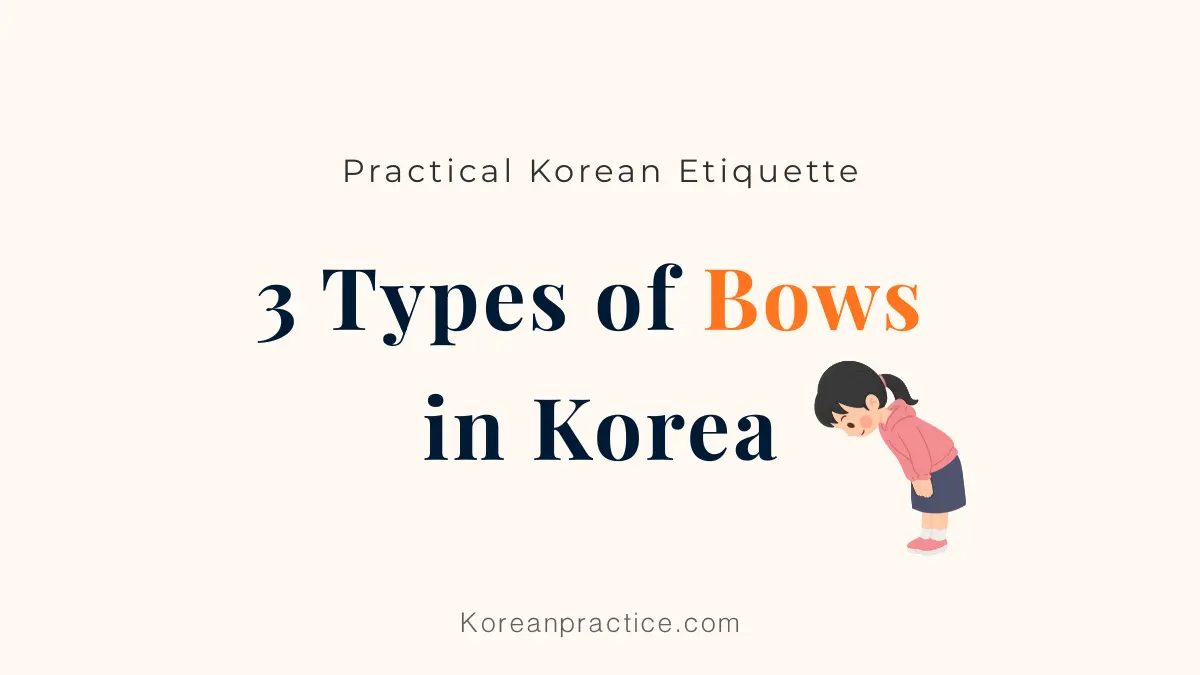
Bowing is an integral part of Korean culture and is used to convey respect, gratitude, and apology. It is a physical gesture that involves lowering one’s head and upper body toward the other person.
Bowing is a way of showing reverence and is deeply rooted in the Confucian philosophy that emphasizes respect for elders, hierarchy, and social harmony.
In this article, we will explore how to say bow in Korean, the various aspects of bowing in Korean culture, including its history, types, meaning, and etiquette.
Quick Warm-up Quiz!
Test your skills before diving into the blog post! 🧩 See if your Korean intuition is right on track.
Table of Contents
The History of the Bow in Korean Culture
Bowing has been a part of Korean culture for over a thousand years and has its roots in Confucianism.
Confucianism is a philosophical and ethical system that originated in ancient China and later spread to Korea, Japan, and other East Asian countries.
Confucianism places great emphasis on hierarchical relationships and social harmony. In the Confucian philosophy, the bow in Korean culture is a way of showing respect to superiors and elders.
How do you say “Bow” in Korean?
In Korean, there isn’t just one word for “bow.” It depends on whether you are talking about a simple greeting or a formal ceremony:
인사하다 (in-sa-ha-da): To greet or to bow (The most common word for everyday use).
절하다 (jeol-ha-da): To perform a formal bow (Usually involving kneeling or deep respect).
The style you choose depends entirely on the situation and who you are with.
3 Types of Bow in Korean Culture
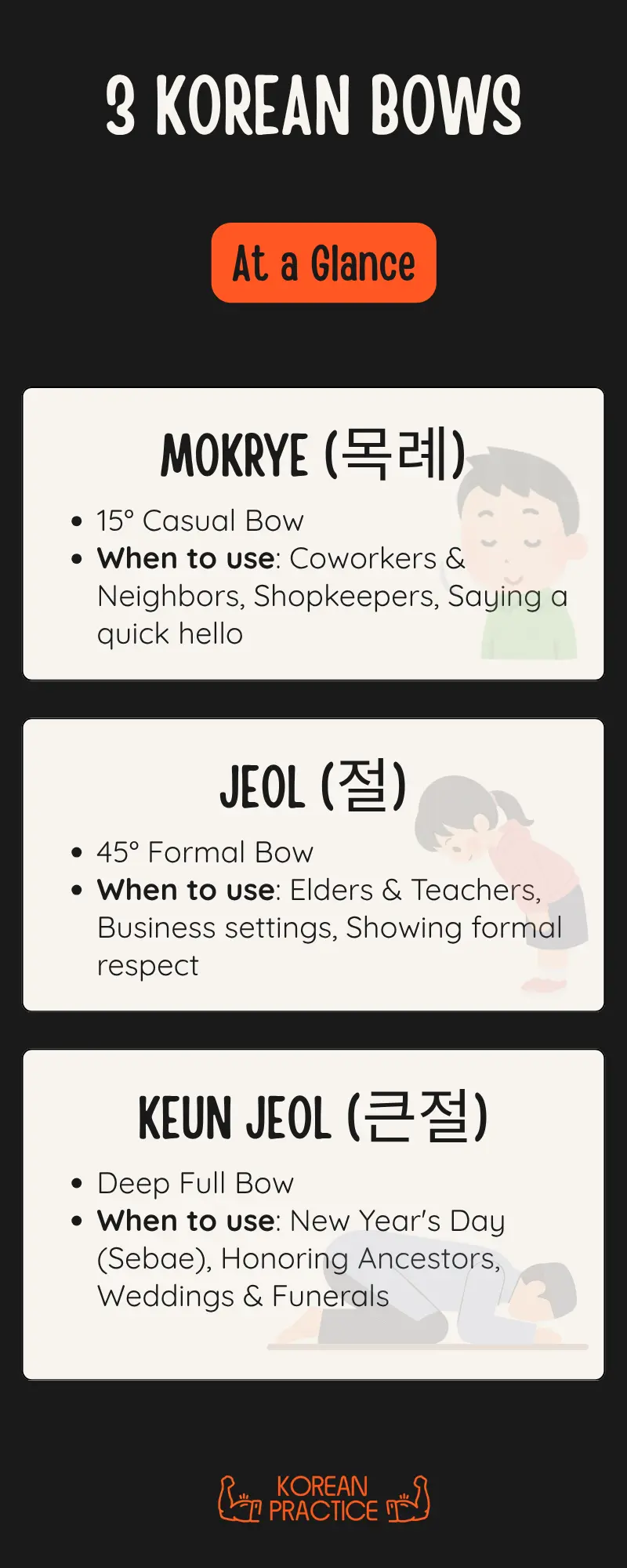
There are three main types of bowing in Korean culture: Sebae, Jeol, and Mokrye.
1. 큰 절 (Keun Jeol) The Deep Full Bow – For Big Moments
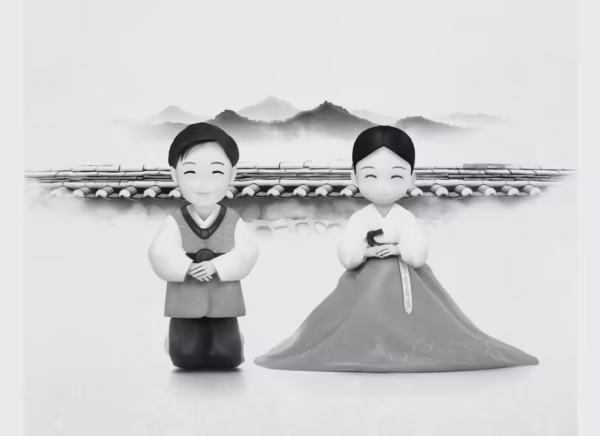
큰 절 is the most formal type of bowing and is used to show the highest form of respect. 큰 절 involves kneeling on both knees and bowing one’s head to the ground. It is typically reserved for royalty, religious leaders, and funerals.
You’d use this kind of bow on New Year’s Day, when honoring ancestors, or at very formal ceremonies. Kids often do this to elders on New Year to show deep respect.
It’s what I call the “big bow.” Definitely not for everyday use. This is the “special occasions only” bow.
Want to understand age differences in Korea? Read Korean Age System?
2. 절 (Jeol) The Formal Standing Bow – For Respectful Situations
Jeol is a formal bow that is used in business settings and ceremonies. Jeol involves bowing at a 45-degree angle with the hands placed on the thighs, lower your eyes, and bow from your waist. The depth and duration of the bow depend on the level of respect being conveyed.
When you greet someone older, like a professor, or attend a formal event. This is the bow people mean when they say, “bow respectfully.

Blind Date in Korean (Sogaeting) → Learn the word, the rules, and what to expect.
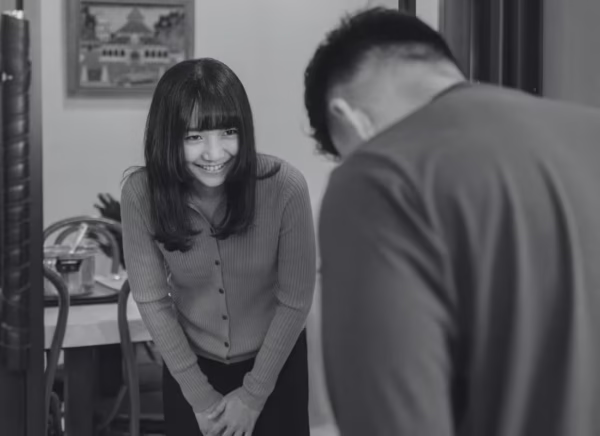
3. 목례 (Mokrye) The Casual Bow – For Everyday Life
Mokrye is the most informal type of bowing and is used in everyday situations. Mokrye involves bowing at a 15-degree angle with the hands placed at the sides. It is typically used to greet friends, colleagues, and acquaintances.
That’s where the casual bow comes in—just a small 15-degree nod. Quick, polite, and super useful in daily life. It shows respect, but in a relaxed way.
You’ll use this one the most—when saying hello, thank you, or goodbye to people like coworkers, shopkeepers, or neighbors.
So:
🙂 Big kneeling bow = deep respect, special days
🙂 45-degree bow = formal, respectful situations
🙂 Small bow = everyday use
The key is matching the depth of the bow to the situation and the level of respect. That’s how you bow like a local in Korea.
Not sure how to introduce yourself? Try How to Introduce Yourself in Korean – 9 Easy Examples →
The Meaning of Bow in Korean Culture
The bow in Korean is used to convey a range of emotions and sentiments in Korean culture, including respect, gratitude, apology, and greeting.
Respect
Respect is one of the core values in Korean culture, and The bow in Korean is a way of showing respect to someone of higher social status or age. When bowing, the depth and duration of the bow indicate the level of respect being conveyed. A deeper and longer bow is used to show more respect, while a shallower and shorter bow is used for less formal situations.
Gratitude
The bow in Korean is also used to show gratitude towards someone who has done something for you. For example, if someone gives you a gift, you would bow to show your appreciation. The depth and duration of the bow depend on the level of gratitude being conveyed.
Apology
In Korean culture, The bow in Korean is a way of apologizing and taking responsibility for one’s actions. When apologizing, the depth and duration of the bow depend on the severity of the situation and the level of respect being conveyed.
Greeting
The bow in Korean is also used as a greeting in Korean culture. When meeting someone for the first time or in a more formal setting, a bow is typically used instead of a handshake. The depth and duration of the bow in Korean depend on the social status and age of the person being greeted.
The Etiquette of Bow in Korean Culture
Understanding the proper etiquette of bowing is crucial when interacting with Koreans in both formal and informal settings. Here are some dos and don’ts of bow in Korean culture.
Who to Bow to
In general, you should bow to someone who is older or of higher social status than you. This includes parents, teachers, bosses, and elders. You should also bow to someone who is performing a service for you, such as a waiter or a salesperson.
How to Bow
The depth and duration of the bow depending on the level of respect being conveyed. When bowing to someone of higher social status, you should bow deeper and for a longer duration. When bowing to someone who is the same age or social status as you, a shallower and shorter bow is appropriate. When bowing, keep your hands at your sides and your eyes lowered.
When to Bow
Bowing is appropriate in a variety of situations, including when greeting someone, thanking someone, apologizing, and saying goodbye. In more formal situations, such as a business meeting or a wedding, a bow may be expected as a sign of respect.
Dos and Don’ts of Bowing
Do bow when meeting someone for the first time or in a formal setting. Do bow to someone who is older or of higher social status than you. Don’t bow to someone who is younger or of lower social status than you. Don’t bow inappropriately, such as in a casual setting or when meeting someone of the same age or social status.
Korean Honorifics Made Simple: Why ‘시’ Is the Key to Respectful Korean
Korean Sentence Related to Bow in Korean
Original Korean Sentence
인사를 잘 하는 사람이 대인 관계도 좋아.
Pronunciation Guide
인사를 (in-sa-reul) 잘 (jal) 하는 (ha-neun) 사라미 (sa-ra-mi) 대인 (dae-in) 관계도 (gwan-gye-do) 조아 (jo-a).
Meaning and Context
인사 (greeting) 를 (object marker; my object is greeting) 잘 (well) 하 (to do) 는 (who) 사람 (person) 이 (subject marker; the subject of this sentence is a person who greets well) 대인 관계 (relationships with people) 도 (also) 좋 (to be good) 아 (casual form; I’m telling you casually).
English Translation
A person who greets well also has good social relationships.
Literal Translation
Person who greets well also good at personal relationships.

FAQs (What You Might Still Wonder About)
1. Is bowing only used in Korea?
No, bowing is also used in other East Asian countries such as Japan and China.
2. What is the proper depth and duration of a bow?
The depth and duration of a bow depend on the level of respect being conveyed.
3. Do I need to bow to everyone in Korea?
No, you should only bow to someone who is older or of higher social status than you.
4. Can I shake hands instead of bowing in Korea?
While shaking hands is becoming more common in Korea, bowing is still the traditional way of showing respect.
5. Is it okay to bow with one hand in your pocket?
No, it is considered impolite to have your hands in your pockets when bowing in Korean culture.
6. Can I bow too deeply and for too long?
Yes, it is possible to overdo a bow and make it seem insincere or even mocking. It is important to follow the proper etiquette of bowing to convey the appropriate level of respect.
7. Do I need to bow to everyone in a group?
You should bow to the person of highest social status or age in the group as a sign of respect.
Final words
Understanding the art of bowing in Korean culture is about more than just a physical movement; it’s a powerful way to express korean bow respect, gratitude, and sincerity. Whether you are giving a deep Keun-jeol or a light Mokrye, your effort to follow these customs will be deeply appreciated by the locals.
If you were wondering how to say bow in Korean, just remember 인사하다 (insahada) for greetings and 절하다 (jeolhada) for formal situations. Learning how to bow in Korea correctly may feel a bit overwhelming at first, but don’t worry about being perfect from day one. In Korea, the heart and intention behind the gesture are what matter most.
As you practice bow in Korean etiquette, you’ll naturally build better relationships and make a great impression. Now that you’ve mastered the “how” and “why” of bowing in Korean, you’re one step closer to truly understanding the Korean way of life. Keep practicing, and stay respectful!