Have you ever heard that Koreans are one or two years older than their international age? The Korean age system is one of the most unique—and sometimes confusing—parts of South Korean culture.
While things changed officially in 2023, understanding the age system in Korea is still essential for anyone who wants to speak the language or understand K-dramas. Let’s break down how it works and why it matters.
Table of Contents
What Is the Korean Age System?
Traditionally, the Korean age system works differently from the rest of the world. In this system:
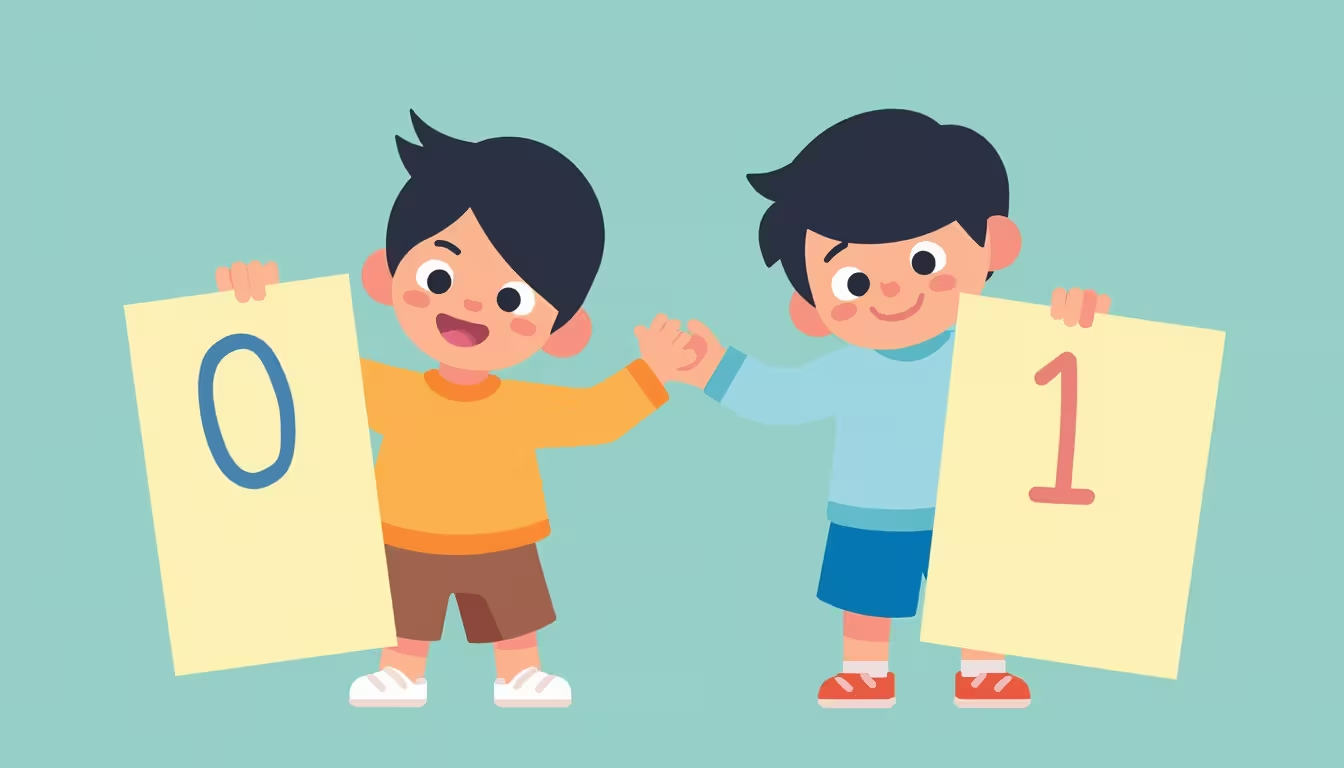
You are 1 year old at birth: Koreans count the time spent in the womb as your first year.
Everyone gets older on January 1st: Instead of aging on your birthday, everyone in the country gains a year together on New Year’s Day.
The “New Year” Surprise: If a baby is born on December 31st, they are 1 year old. The very next day (January 1st), they turn 2 years old! This is why a person’s Korean age can be up to two years older than their international age.
The Big Change: South Korean Age System Change (2023)
In June 2023, the government announced a major South Korean age system change. South Korea officially adopted the international age system for all legal, administrative, and medical documents.
Official Documents: Your age is now calculated by your birthday (just like in the West).
Social Reality: Even with the official change, many people still use the traditional age system in Korea during casual conversations or when determining seniority in a group.
Stop playing house with “easy” methods that don’t work.
Isolated vocabulary and grammar won’t help you speak. You need to understand the core structure first.
1. Breakdown: Master Korean sentence structure with our Story Style Breakdown™.
2. Training: Turn that knowledge into an instant reflex through Brain Rewiring™.
Install the Korean Engine in your brain. Move beyond simple memorization and start speaking with confidence.
Why Does Age Matter So Much in Korea?
In Korea, age isn’t just a number—it’s a social rulebook. It determines the hierarchy of a relationship and affects:
Speech Levels: It dictates whether you use formal (Jondetmal) or informal (Banmal) language.
Titles: It determines if you call someone Oppa, Unnie, Hyung, or Noona.
Social Roles: Usually, the older person leads the group and often pays for the meal!
👉 Start with “Learn How to Say Hello in Korean Translation with These 4 Powerful Steps.”
How to Calculate Your Korean Age (Formula)
If you want to know your age according to the traditional system, you don’t need a Korean age system calculator. You can use this simple formula:
Korean Age = (Current Year – Birth Year) + 1
Example: If it is 2025 and you were born in 2000: 2025 – 2000 + 1 = 26 years old.
👉 Learn more in “3 Types of Bow in Korean Culture: When and How to Use.”
Comparison: Korean vs. International Age
| Feature | International Age | Traditional Korean Age |
| At Birth | 0 years old | 1 year old |
| When you age | On your birthday | On January 1st |
| Usage | Legal & Official (Since 2023) | Social & Casual |
👉 Explore “6 Powerful Korean Hurry Culture” to see how fast-paced life shapes behavior.
FAQs (What You Might Still Wonder About)
1. Do K-pop idols still use the Korean age system?
Yes. In interviews and variety shows, idols often mention their traditional age because it determines their “rank” (older vs. younger) within the group.
2. How should I ask someone’s age politely?
Instead of asking “How old are you?”, it is more polite to say: “나이가 어떻게 되세요?” (What is your age?). This helps you decide which level of politeness to use when speaking.
3. Can I refuse to answer my age?
In Korea, asking for age is not usually considered rude; it’s seen as necessary context. However, you can playfully say “비밀이에요~” (It’s a secret) if you’d rather not share.
4. Is there a “Social Age” vs. “Legal Age” in school?
Even after the Korean age system change, school enrollment usually follows the birth year. Children born in the same calendar year (January to December) enter school together. This means even if your birthday hasn’t passed, you are in the same “grade-age” as your classmates, which simplifies the hierarchy among peers.
5. Why do Koreans sometimes ask for my “Year” instead of my age?
Because the age system in Korea can be confusing, Koreans often ask “몇 년생이세요?” (What year were you born?). By knowing your birth year, they can instantly calculate your seniority relative to them without worrying about whether you’re using your international or traditional age.
6. Does the age system affect how I order food or drinks?
Legally, no. For buying alcohol or cigarettes, the law follows the South Korean age system change rules, but with a slight twist: you are legal starting January 1st of the year you turn 19 (international age). This is to make it easier for businesses to check IDs based on birth year rather than specific dates.
7. What does “Early Birthday” (빠른 년생) mean?
You might hear older Koreans talk about being a “Fast/Early Year.” Before 2009, children born in January or February could enter school a year early. This often created “age wars” in social circles because they were the same school grade as people a year older! While this was officially abolished, you’ll still see adults using this to claim seniority or friendship.
Final words
Understanding the Korean age system is about more than just numbers—it’s a window into Korean values like respect and social harmony. Even with the recent Korean age system change, the traditional ways still influence how people talk, behave, and build relationships today.