Most Korean courses stop at grammar. Mine goes further — stories, breakdowns, and actual practice to make you speak.
| Type of Age | How It Works |
|---|---|
| International | Your birthday counts. Age increases on your birthday. |
| Korean Traditional | 1 year old at birth. Age increases on Jan 1. |
| Legal (2023+) | South Korea now officially uses international age. |
Want to remember all this easily?
Each of my lessons includes beautiful downloadable flashcards like this one:
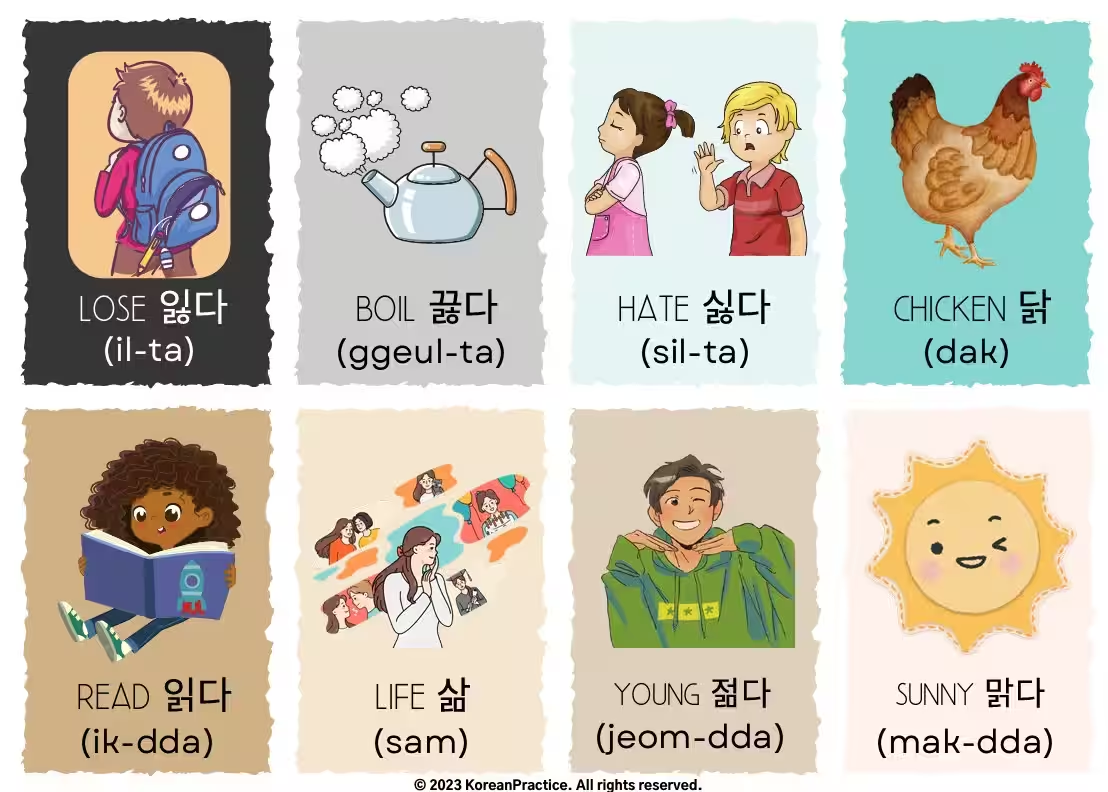
👉 Download this free Korean flashcard to keep learning anytime!
My courses include these helpful visuals so you can learn naturally and review quickly.
1. ❓Do K-dramas and K-pop use the Korean age system?
Yes — in interviews and shows, K-pop idols and actors often refer to their Korean age when talking about milestones or rankings (like youngest/oldest in a group). But in international promotions, they usually use their global age.
2. ❓Is Korean age used in schools or the military?
In everyday school life, students mostly follow their school grade level, but age still determines seniority. In the military, Korean age system was traditionally used, though recent changes have made it more flexible, aligning with the South Korean age system change in official records.
3. ❓Do North and South Korea use the same age system?
While both historically used the traditional Korean age system, North Korea now uses international age officially. South Korea made the same change in 2023, but the age system in Korea still differs socially.
4. ❓How should I ask someone’s age in Korea?
Asking age is common when meeting new people in Korea. It helps decide speech levels (존댓말 vs. 반말). You can say:
👉 “나이가 어떻게 되세요?” (formal)
But be respectful — age is sensitive, especially under the South Korean age system where small differences matter.
5. ❓How can I politely avoid answering age questions in Korea?
If you feel uncomfortable, you can smile and say:
👉 “비밀이에요~” (It’s a secret~)
or
👉 “좀 어려운 질문이네요.” (That’s a tough question.)
But know that this might surprise people — the Korean age system makes age feel like necessary context in social settings.